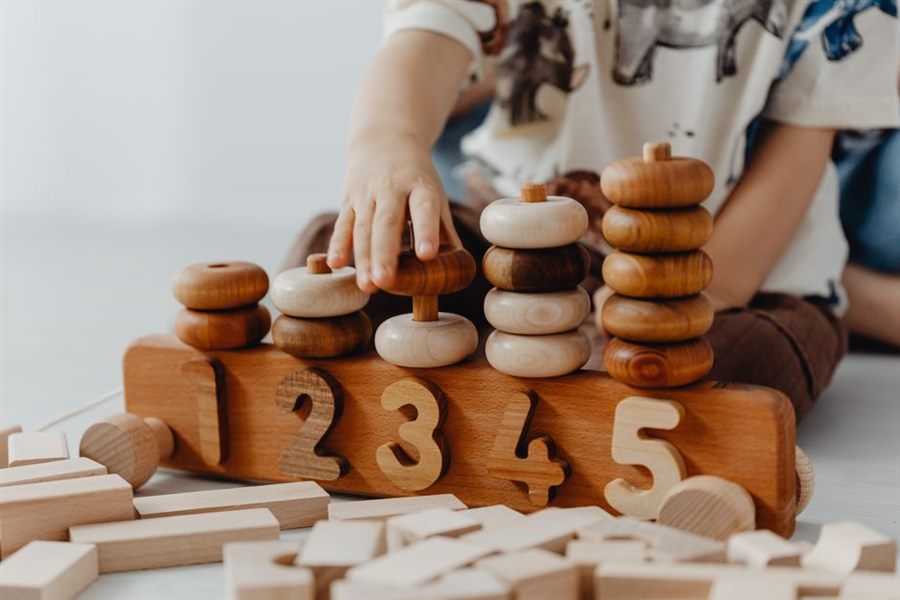
Best Montessori Practical Life Toys for Toddlers
The best Montessori practical life toys for toddlers aren’t toys at all, they’re real tools scaled down to toddler hands. Practical life work is the Montessori term for everyday tasks like pouring, dressing, and cleaning up. Fifty open browser tabs and a toddler pulling at your leg is not a research process. It doesn’t need much: a handful of well-made tools, and a little patience while they figure it out.
This guide to Montessori practical life toys for toddlers covers every category, not just one popular kitchen gadget. Worth reading even if a learning tower isn’t on your list.
This guide is compiled from independent research, not hands-on testing. We are not currently part of any affiliate program, and this post contains no affiliate links.
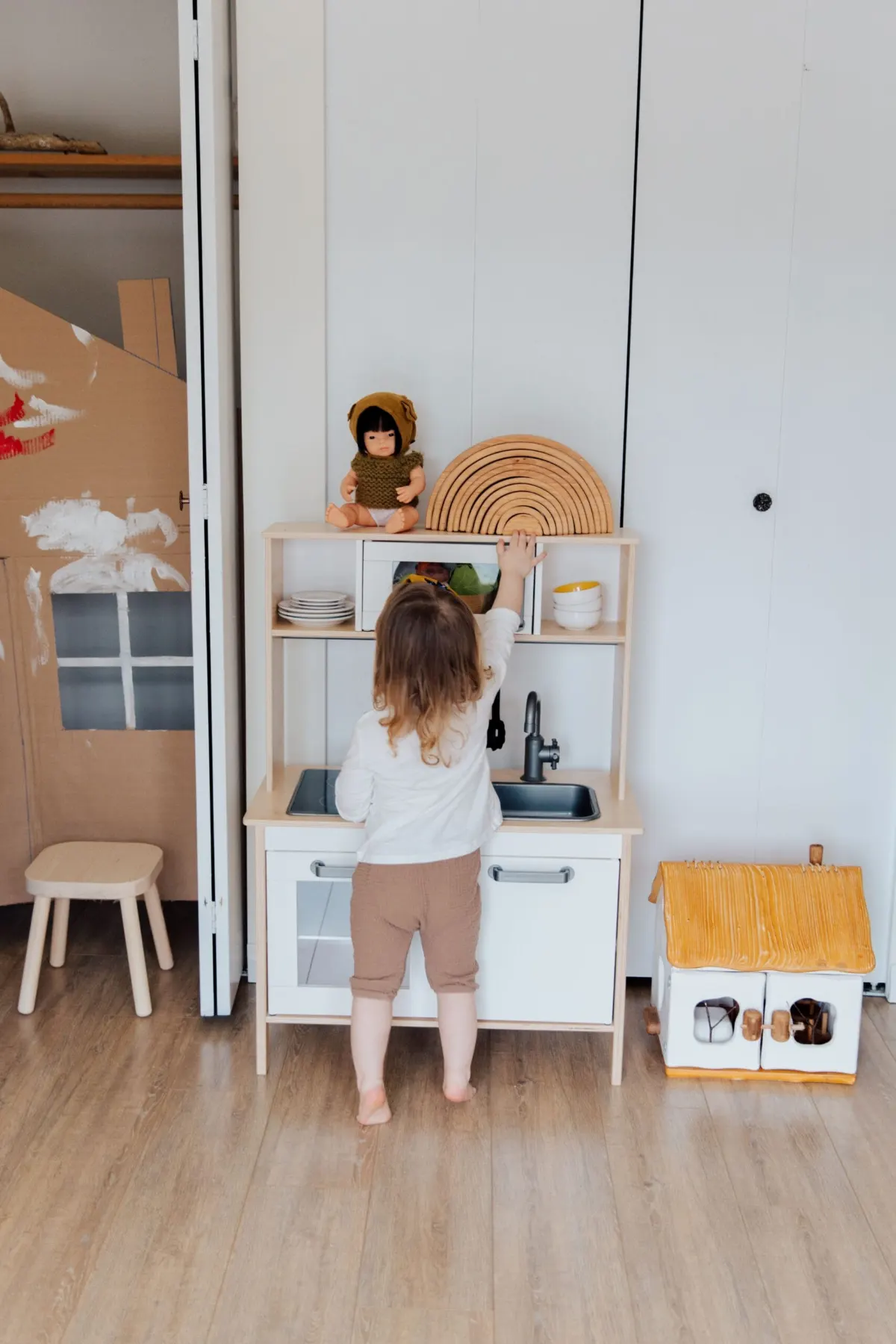
The short answer
Montessori practical life toys for toddlers teach a real household skill, like pouring, buttoning, sweeping, or food prep, using scaled-down real tools rather than a toy version that only pretends to work. The goal is independence, not entertainment, so a practical life toy that doesn’t actually function the way the real object would misses the point of the method. The picks below were chosen because they genuinely work, not because the packaging says Montessori.
How We Chose These Picks
Each pick was chosen by comparing manufacturer specifications, safety certifications, and patterns across customer reviews. Products favored here are the ones where the same praise or the same complaint showed up repeatedly, not just a single five-star outlier.
None of these products were purchased and tested hands-on by this site. Where a claim comes from review patterns rather than direct testing, it’s noted as such. Products with vague sourcing or no verifiable brand were left out rather than included as filler.
Why Practical Life Work Actually Matters
Maria Montessori, the physician and educator who developed this method, called this idea “control of error.” A well-designed practical life material lets a toddler see their own mistake on their own. A button left undone. Water spilled past the tray. No parent has to step in and correct it.
That self-checking loop is what builds independence, not the toy itself. It’s also why buying every practical life product at once tends to backfire. One or two materials in rotation get used and mastered. Six at once usually means none of them get real attention. Start narrow.
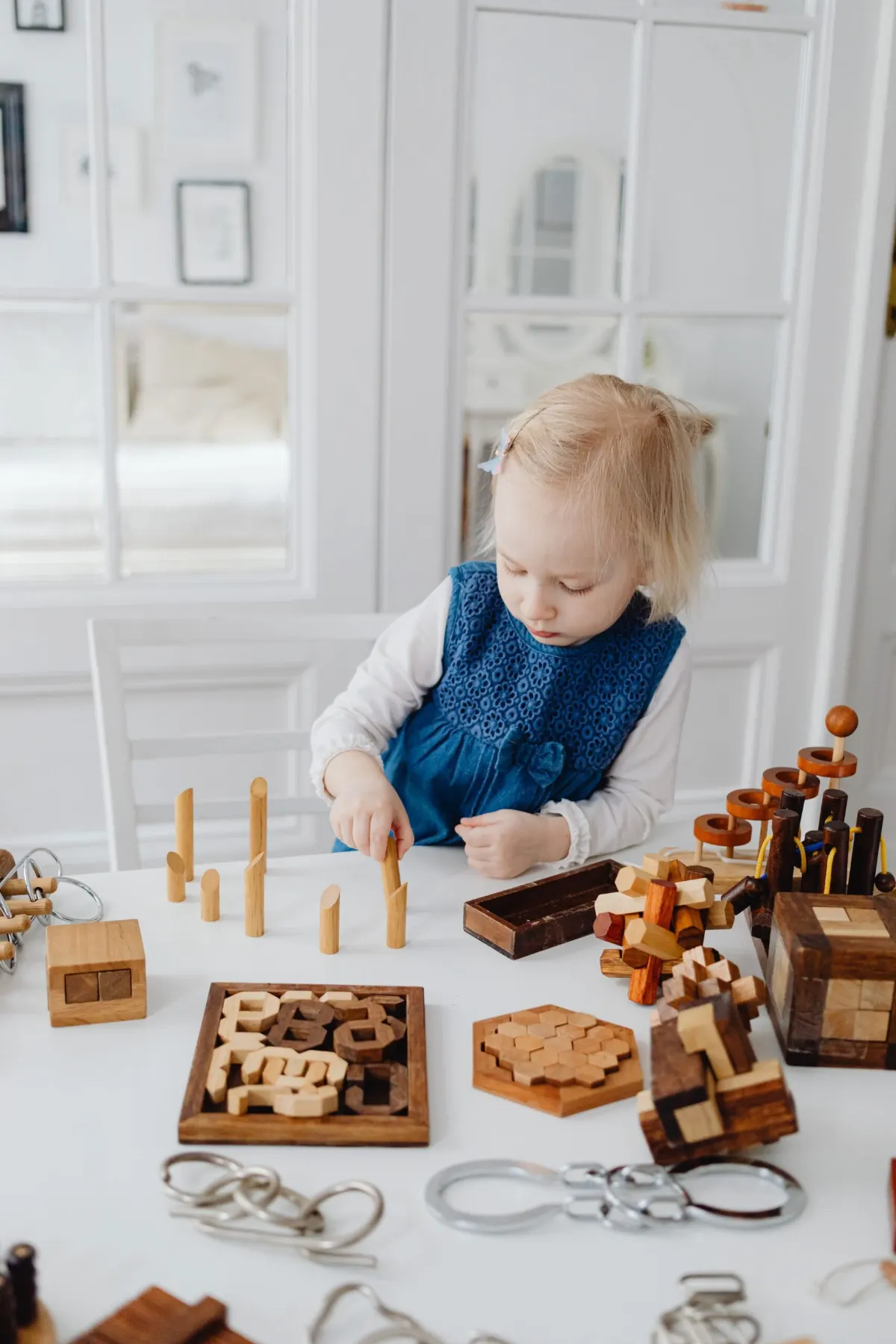
Quick Picks
Best Overall — Tovla Jr. Ultimate Montessori Cooking Gift Set ($27.95). The most-reviewed product in this category by a wide margin, with a design specifically built around blunt, serrated edges that handle soft food without handling skin.
Best for Building Independence — Montessori Dressing Frames, 4-Pack. Button, zipper, buckle, and snap, each isolated on its own frame instead of bundled into one overwhelming toy.
Best for Fine Motor & Sensory — KOOKAROO Wooden Funnel & Pouring Set. Mango wood, sized for small hands, works with both water and dry materials like rice or grains.
Dressing Skills
Montessori Dressing Frames, 4-Pack
Each frame in this set isolates one fastener — button, zipper, buckle, or snap — so a toddler can practice a single motion without a full shirt fighting back at the same time. That isolation is the control-of-error principle in action: get the button through the hole or don’t, no adult judgment required either way.
Readiness matters more than age here. A toddler tugging at their own zipper, insisting on picking their own shoes, or getting annoyed when someone else buttons their coat is a clearer signal than any specific month on a calendar. Frames built from smooth, splinter-free wood with reinforced stitching tend to hold up best over repeated use.
Reasons to Buy
- Each frame isolates one transferable, real-world skill
- No batteries, screens, or lights, just the actual mechanics
Worth Knowing
- Not useful until a toddler is developmentally ready for dressing practice
- Pricing varies by seller; check the current listing
Pouring & Transferring
KOOKAROO Wooden Funnel & Sensory Pouring Set
Pouring is one of the earliest practical life exercises for a reason. It’s a single continuous motion, and a toddler can watch it fail in real time — water past the rim, grain on the counter — then adjust on the next try.
This set uses mango wood instead of plastic, and that choice matters more than it sounds. Wood holds up to repeated water contact without the warping that thin plastic scoops develop within a season. It also works with dry materials like rice, dried beans, or sand — worth starting with before moving to water, since spills are lower-stakes and cleanup is faster while the motion is still new. Expect spills either way. They’re part of how the skill develops, not a sign anything’s wrong.
Reasons to Buy
- Solid mango wood holds up to repeated water contact
- Works for both dry transferring and wet pouring practice
Worth Knowing
- Spills are frequent early on, plan for a towel nearby
- Pricing varies by seller; check the current listing
Food Preparation & Fine Motor
Tovla Jr. Ultimate Montessori Cooking Gift Set — $27.95
Tovla Jr. leads this category by a wide margin — thousands of reviews compared to a fraction of that for competitors. The design explains why: serrated nylon edges cut through bananas, cooked pasta, and soft bread, but won’t cut skin. It’s paired with a blunt tip and a grip sized for a three-year-old’s hand.
The best way to introduce it isn’t to hand it over and walk away. Demonstrate the motion once, slowly, narrating what you’re doing. Then step back and let mistakes happen without correcting mid-cut. That handoff is where most of the learning takes place, not in the tool itself. The full kit includes a peeler, cutting board, and recipe cards — useful if food prep is becoming a regular activity, right alongside the rest of a toddler’s mealtime setup.
Reasons to Buy
- Serrated nylon edge cuts soft food but not skin
- Widely reviewed, with consistent praise for the child-sized grip
Worth Knowing
- Only handles soft foods; not a substitute for a real knife later on
- Still requires direct supervision, it’s food-safe, not unsupervised-safe
Care of the Environment
WOODMAM Wooden Kids Cleaning Set, 8-Piece
A broom sized for a toddler changes cleanup from a performance into something they can genuinely help with. This set includes a broom, mop, duster, brush, and dustpan built to look and function like working tools, not a plastic toy version of one — that’s the detail that determines whether it gets used past the first week.
Pair it with a spill that actually happened, not a staged one. Toddlers tend to understand the connection faster that way than through any explanation.
Reasons to Buy
- Functions as real cleaning tools, not just pretend play
- Eight pieces cover most common cleanup tasks
Worth Knowing
- Not as durable as adult-grade tools under heavy daily use
- Pricing varies by seller; check the current listing
Also Consider: A Kitchen Learning Tower
A learning tower isn’t a practical life material itself. It’s furniture that gives a toddler safe access to counter-height activities like the ones above.
If kitchen space and budget allow for one, the Boon Pivot ($149.99) is the strongest single option. It’s from an established brand, with a pivoting platform that converts into a step stool as a child grows, and reviews consistently describe it as stable under normal counter-height use. Keep it away from the stove and hot surfaces, and stay within earshot even once a toddler seems confident on it. A full comparison of learning towers, including budget and premium alternatives, deserves its own guide — this is the one pick worth knowing about here.
Side-by-Side Comparison
| Product | Age | Best For | Durability | Price |
|---|---|---|---|---|
| Tovla Jr. Cooking Gift Set | 2.5-5 years | Food prep, fine motor | High – nylon resists chipping | .95 |
| Montessori Dressing Frames, 4-Pack | 18 months-3 years | Dressing skills | High – solid wood frames | Varies |
| KOOKAROO Wooden Funnel & Pouring Set | 18 months+ | Pouring, transferring | High – mango wood resists warping | Varies |
| WOODMAM Wooden Cleaning Set | 2 years+ | Care of environment | Moderate – not adult-grade | Varies |
| Boon Pivot Toddler Tower | 2 years+ | Kitchen helper (optional) | High – converts as child grows | .99 |
What to Look For
Solid materials over plastic gimmicks. Wood tends to outlast thin plastic by years, not months — a pattern that shows up clearly across reviews for every product above.
A genuine task, not a toy version of one. The strongest practical life pieces mimic something an adult actually does — pouring, buttoning, cutting — rather than an abstracted “educational” imitation of it.
One material at a time, introduced and actually used, beats a full set gathering dust in a bin. If interest fades fast, that’s usually a sign to rotate rather than to buy more.
As your toddler ages up, our 18-month-old toy guide is a good next stop.
Frequently Asked Questions
What age should practical life activities start?
There’s no fixed rule, but many Montessori-trained educators introduce simple activities like pouring or dressing frames starting around 18 months, with more complex tasks like buttoning or food prep suited to 2.5 years and up. Behavior is a better guide than the calendar: a toddler reaching for a task on their own is usually ready for it.
Do I need a learning tower to do practical life activities?
No. Dressing, pouring, and cleaning tasks don’t require counter height at all. A tower helps specifically with kitchen-based tasks like food prep, but it’s an optional add-on to this category, not a requirement.
How many practical life materials does a toddler actually need?
Fewer than most gift guides suggest. One or two in active rotation, swapped out when interest fades, tends to hold attention better than a full shelf of options presented all at once.
For a broader roundup that goes beyond practical life — shape sorters, stackers, and open-ended building toys — see our guide to the best Montessori toys for toddlers.
About the Author: Emma Carter
Emma Carter writes and edits every guide on 3 Things for Mom. She researches each recommendation through manufacturer specs, safety certifications, and patterns across real customer reviews before it makes the list. More on how picks are made →
(Illustrated avatar, not a photograph.)