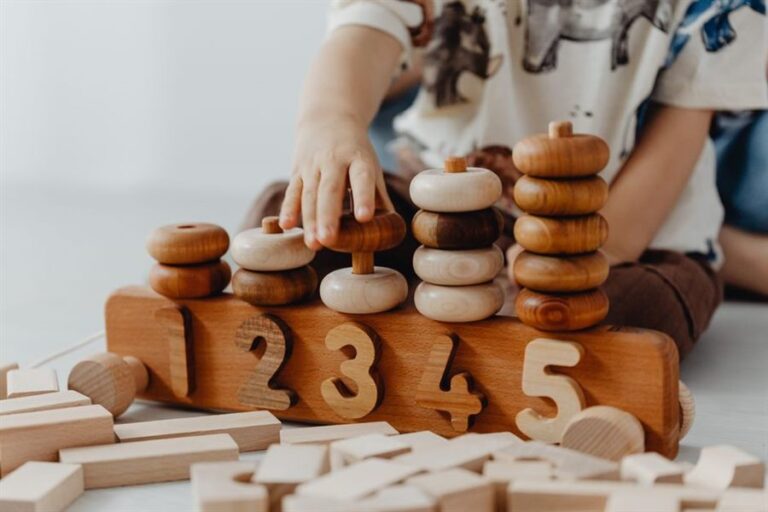
Montessori Toys for Toddlers: 6 Real Picks
Wood, not plastic. One skill, not ten. No batteries. That’s really the whole test for the best montessori toys for toddlers, and it’s the one we used to narrow six real Amazon picks down from a much longer list of things wearing the label loosely.
The short answer
A real Montessori toy for toddlers is built around one clear skill, like pouring, sorting, matching, or practical life, rather than lights, sounds, or a screen doing the engagement work for the child. The word “Montessori” isn’t regulated and shows up on toys that have little to do with the method, so the real test is whether a toy lets a toddler complete a task independently and see the result themselves. The picks below were chosen by that standard, not by whether the word appeared on the box.
How We Chose These Picks
We didn’t go looking for the word “Montessori” on a box. We went looking for the method first, then checked which toys actually held up to it. Natural materials. A single clear skill. Open-ended play instead of one right answer. And no lights or sound effects doing the job a toddler’s own hands are supposed to do.
After that it was mostly reading reviews — a lot of them. We leaned on verified Amazon purchases for each pick, weighting anything from the last twelve months more heavily than older feedback, since manufacturers quietly swap materials and suppliers all the time. A toy with a pattern of complaints about small parts, sharp seams, or pieces snapping off got cut. Didn’t matter what the star average said.
One honesty note: nobody on our team has bought or hand-tested these with their own toddler yet. Everything below comes from that review research, not from watching a kid actually play with them. If that changes, we’ll update this page.

What Actually Makes a Toy Montessori (Not Just Labeled That Way)
Half the toy aisle slaps “Montessori” on the box these days, usually right above a speaker that plays a tinny little song. That’s the opposite of the point. The American Montessori Society traces the real approach back to Dr. Maria Montessori’s own classroom materials, which were built so a child could catch and fix their own mistake — no adult, and definitely no gadget, stepping in to correct it for them.
A few things tend to separate the real thing from a toy just borrowing the name.
Natural materials. Wood, cotton, metal — they have real weight and texture that plastic never quite manages. Pick up a wooden ring in each hand and it feels different; set it down on a table and it even sounds different. Kids clock that, even at an age where they can’t explain why.
One skill at a time. A shape sorter teaches spatial reasoning. A stacking ring teaches size order. Stuff colors, numbers, letters, and a music button into the same toy and you’re competing with yourself for your kid’s attention.
Open-ended over prescriptive. A toy with exactly one correct way to use it gets boring inside a week. Wooden arches and blocks keep getting reinvented — towers, tunnels, a wall for somebody’s stuffed animals — long after a single-purpose toy would’ve been forgotten in a closet.
Self-correcting. The toy itself should show a kid when something’s off, like a puzzle piece that just won’t sit flush, instead of a light or a chime doing the correcting. That’s the gap between a toddler learning to problem-solve on their own and one waiting around for a reaction.
Quick Picks: Best Montessori Toys for Toddlers
Short on time? These three are worth checking first — picked for review volume and consistency, not for whichever listing says “Montessori” the loudest.
Best Overall: Melissa & Doug Shape Sorting Cube. A classic wooden cube with 12 shapes, from a brand parents already trust, with tens of thousands of ratings behind it.
Best for Open-Ended Play: Fisher-Price Wooden Stacking Rainbow. Six chunky arches that turn into towers and tunnels long after a toy is technically “supposed” to have been outgrown.
Best Budget: Amazon Basics Wooden Shape Sorter & Rainbow Stacker. Two skills in one wooden set, without the brand-name markup.
Melissa & Doug Shape Sorting Cube
Ten thousand-plus ratings is a lot for any toddler toy, let alone one this specific, and a 4.5-star average across that many reviews means something. It does exactly one job — match the shape to the hole — and it does it without any lights or sound effects picking up the slack.
Reasons to Buy
- You want the single most tested shape-sorting toy on the market
- Your toddler is just starting to recognize basic shapes
- You want something that survives past the newborn-to-toddler handoff
Worth Knowing
- A handful of reviewers mention the lid popping off during rough play
- Check the fit before leaving a toddler alone with it
Fisher-Price Wooden Stacking Rainbow
Six wooden arches nest into a rainbow when stacked “correctly,” but that’s not really where this one earns its keep. Reviewers keep describing kids turning it into tunnels, bridges, whatever a two-year-old’s imagination decides that afternoon — exactly the reuse a Montessori-aligned toy is meant to invite.
Reasons to Buy
- You want a toy that stays interesting well past the toddler years
- Your child responds better to open-ended building than single-answer puzzles
- You want large pieces with no small-parts choking risk
Worth Knowing
- Won’t teach shape-matching the way a sorter cube does
- Most parents buy it as a second toy rather than a first
Amazon Basics Wooden Shape Sorter & Rainbow Stacker
Cheaper than most name-brand options, and it still holds a 4.7-star average across roughly 2,000 ratings. Sorting and stacking in one wooden set is a decent way to try this style of play before paying a brand-name premium on it.
Reasons to Buy
- You want two skills — sorting and stacking — in one purchase
- Budget matters more than brand name here
- You need a gift-safe option under $15
Worth Knowing
- The paint job is noticeably thinner than the pricier options
- Expect visible wear a bit sooner than pricier picks
Melissa & Doug Wooden Rainbow Ring Stacker
Same trusted brand as the shape cube above, but stripped down further — this one is just size-ordering, nothing else competing for attention. Rings and a peg, full stop.
Reasons to Buy
- You want the simplest possible first stacking toy
- Your toddler is working on size and order concepts
- You already trust the brand from the shape cube pick
Worth Knowing
- Teaches less than the shape cube on its own
- Families tend to add it second or third, not as the only toy
GOPO Wooden Shape Sorter & Stacking Puzzle
At 4.8 stars across more than 3,500 ratings, this budget pick is out-scoring several pricier competitors — which doesn’t happen often in this category. It combines sorting and stacking in a small wooden set sized for a one-year-old’s hands specifically.
Reasons to Buy
- You want the best rating-to-price ratio on this list
- Your toddler is younger (12mo+) and needs smaller, hand-sized pieces
- This is a first Montessori toy and you don’t want to overspend
Worth Knowing
- Smaller pieces mean closer supervision is needed
- Best once the mouthing-everything phase is behind you
Exorany Montessori Busy Board
Once sorting and stacking start feeling too easy, a busy board shifts things toward practical life — zippers, latches, buckles, switches. Real hardware, more or less, instead of abstract shapes.
Reasons to Buy
- You want practical-life skills — zippers, latches, buckles — not just shapes
- Your toddler is closer to preschool age (24mo+)
- You’d rather cover a dozen skills in one toy than buy several
Worth Knowing
- Packs in more elements than a strict single-skill toy would
- Treat it as the practical-life exception, not the classic material — see our full guide to Montessori practical life toys for more picks like it
Side-by-Side Comparison
| Toy | Best For | Price / Rating | Verdict |
|---|---|---|---|
| Melissa & Doug Shape Sorting Cube | 18mo+ | ~$19.99 · ★4.5 | Best Overall |
| Fisher-Price Wooden Stacking Rainbow | 18mo+ | ~$16.99 · ★4.9 | Best Open-Ended Play |
| Amazon Basics Wooden Shape Sorter & Rainbow Stacker | 12mo+ | ~$13.99 · ★4.7 | Best Budget |
| Melissa & Doug Wooden Rainbow Ring Stacker | 18mo+ | ~$14.99 · ★4.7 | Best First Stacker |
| GOPO Wooden Shape Sorter & Stacking Puzzle | 12mo+ | ~$9.99 · ★4.8 | Best Value Pick |
| Exorany Montessori Busy Board | 24mo+ | ~$21.99 · ★4.6 | Best for Practical Life |
Prices and ratings reflect retailer listings checked at the time of publishing and will change — confirm the current price before buying.
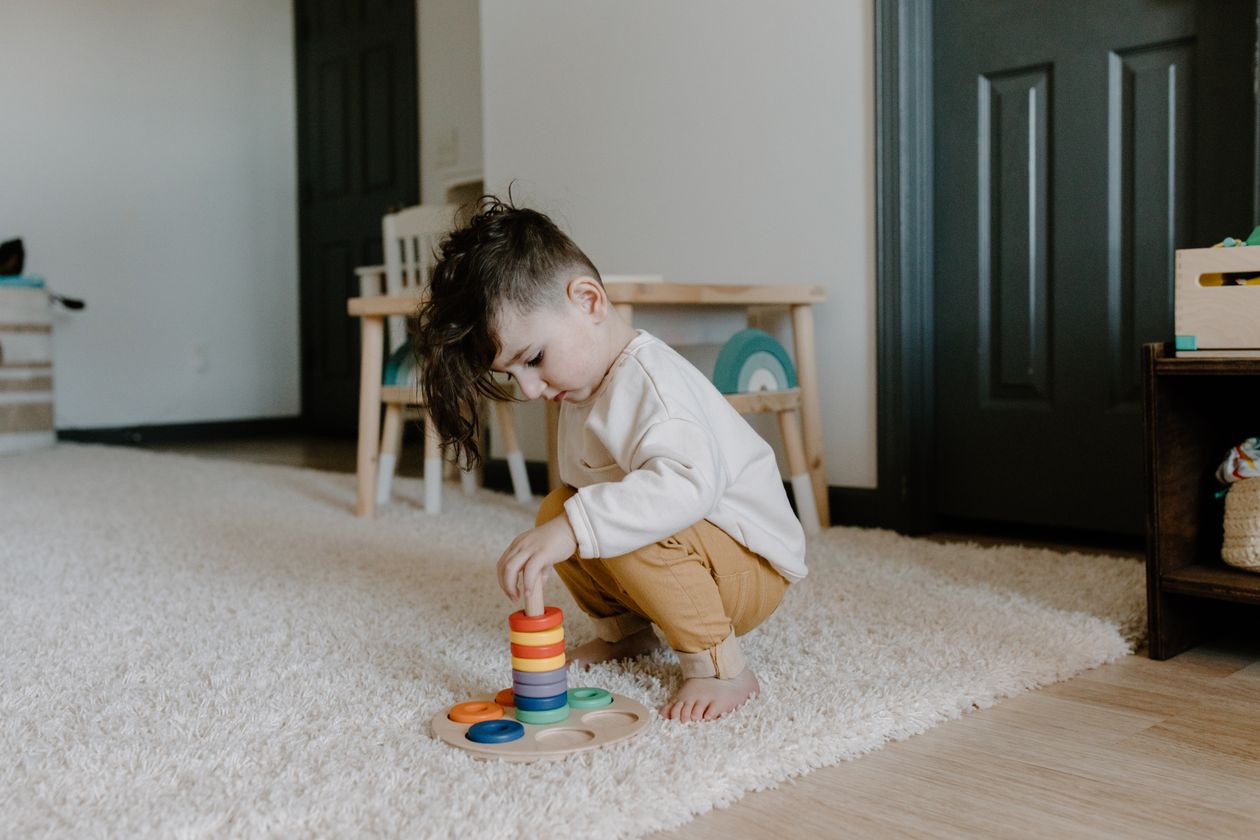
Frequently Asked Questions
What age should a toddler start Montessori toys? Most of these are built for 12 months and up, roughly when a toddler has the grip strength and coordination to actually manipulate individual pieces.
Are Montessori toys worth the extra cost? Wood costs more to manufacture than plastic, but the picks here run from under $10 to about $22 — not the price barrier people assume.
Do I need to follow Montessori at home for these toys to work? No. They work because of what they’re made of and how they’re built, not because of any philosophy you have to adopt at home.
What’s the difference between “Montessori” and “Montessori-inspired” toys? True Montessori materials match what’s actually used in Montessori classrooms. Montessori-inspired toys borrow the same idea — natural materials, no batteries, one skill — without being classroom-standard items.
Practical Takeaway
Skip the flashing lights and the ten-skills-in-one gimmicks. A wooden shape sorter or stacker is the right place to start, and a busy board can wait until your toddler’s closer to preschool age and ready for zippers and latches.
For more toy and book picks organized by age, see our guides to best outdoor toys for a 1-year-old and best interactive books for toddlers.
Shopping for a slightly older toddler? See our best toys for an 18 month old picks.
About the Author: Emma Carter
Emma Carter writes and edits every guide on 3 Things for Mom. She researches each recommendation through manufacturer specs, safety certifications, and patterns across real customer reviews before it makes the list. More on how picks are made →
(Illustrated avatar, not a photograph.)