25 Outdoor Activities for Toddlers That Hold Attention
Outdoor activities for toddlers work best when they need almost no setup and give a toddler something to do with their hands right away — pouring, stacking, chasing, or hunting for something specific. That’s the filter every idea on this list had to pass before it made the cut: no toy that needs batteries, no craft that needs an adult to finish it, and nothing that falls apart the second a two-year-old gets bored and wanders off mid-project. Jump straight to the list →
For a lower-cost, build-it-yourself option, see our DIY backyard playground guide.
Last updated: September 3, 2026

The short answer
The best outdoor activities for toddlers need almost no setup and give a toddler something to do with their hands within the first minute, since a toddler’s patience for waiting is close to zero. Bubbles, chalk, water play, and simple obstacle courses outperform elaborate outdoor activities because they’re immediately interactive instead of requiring instructions first. The 25 ideas below are organized so a parent can grab one for a 10-minute break or build a full outdoor morning around several of them together.
How We Chose These Activities
We didn’t just brainstorm a list and call it done. Honestly, the first draft had nearly twice as many ideas, and about half got cut once we thought about a real Tuesday afternoon.
Would this actually hold a toddler’s attention past the first five minutes? Does it use stuff already sitting in the garage or a kitchen drawer? Is it something a parent could say yes to without a second thought about safety for the 1-4 age range? A few popular “outdoor activity” ideas we see on other sites got cut for that reason: anything requiring a full sensory table setup, or games with rules a two-year-old simply can’t follow yet. This is research and editorial review, not hands-on product testing; we don’t have technicians or a testing lab, and we won’t claim otherwise.
We also looked at what’s actually searched for. Fun outdoor activities for toddlers doesn’t have to mean a Pinterest-perfect setup. The ideas that hold up best in real backyards are almost always the simplest ones, and that’s the throughline across everything below.
Why Outdoor Play Matters at This Age
The CDC’s physical activity guidance for preschool-aged children calls for active play throughout the day, every day, rather than one scheduled block, and unstructured outdoor time is one of the easiest ways to hit that without it feeling like exercise. Indoor play tends to cap a toddler’s movement to a room’s worth of space. Outside, that same toddler will run, climb, and switch direction dozens of times in twenty minutes flat, which is exactly the kind of varied movement gross-motor development depends on. (For rainy days when outdoor time genuinely isn’t an option, our indoor toddler activities guide covers the equivalent list for inside the house.)
There’s a practical side to this too. Ask a parent who’s had both kinds of afternoon, outdoor and stuck inside, and they’ll almost always say the outdoor one ended with an easier bedtime. It’s not exactly scientific, just a pattern that keeps showing up. None of it requires special equipment. Really it comes down to open space and letting a toddler move at their own pace, which is the idea behind everything below.
Best for Zero Prep
Puddle stomping or a backyard car wash, both use what you already have outside, ready in under a minute.
Best for Under-2s
Watering can helper and sticker hunts: low fall risk, no small parts, works with a short attention span.
Best for a Group
Freeze dance and toddler duck-duck-goose, simple enough rules that 3-4 kids can actually play together.
Adjusting Activities by Age
A 15-month-old and a 4-year-old both count as “toddlers” in the loose way most parents use the word, but they need different versions of the same idea. Younger toddlers do best with activities that have no rules to follow and no turn to wait for, like puddle stomping, bubble chase, or the watering can helper, all of which a toddler can wander in and out of without missing anything. Somewhere around 2.5, most kids can start handling a little structure, like a scavenger hunt list or a simple hopscotch grid, without melting down over rules they’re not quite ready for yet.
The table below sorts everything by the age it tends to suit best, but don’t take those ages too literally. One toddler might be steady on a balance beam at 20 months; another won’t feel ready until closer to 3, and that’s completely normal. Watching how your own kid actually handles an activity beats going strictly by the label.
Water and Sensory Play, Outside
Water is the single most reliable way to buy 20-30 minutes of focused play from a toddler, and none of these need a real sensory table or a trip to the store. If sensory play is the main draw here, our full sensory activities for toddlers guide sorts more ideas by mess level, including a few that work well as a follow-up to the ones below.
1. DIY Splash Table
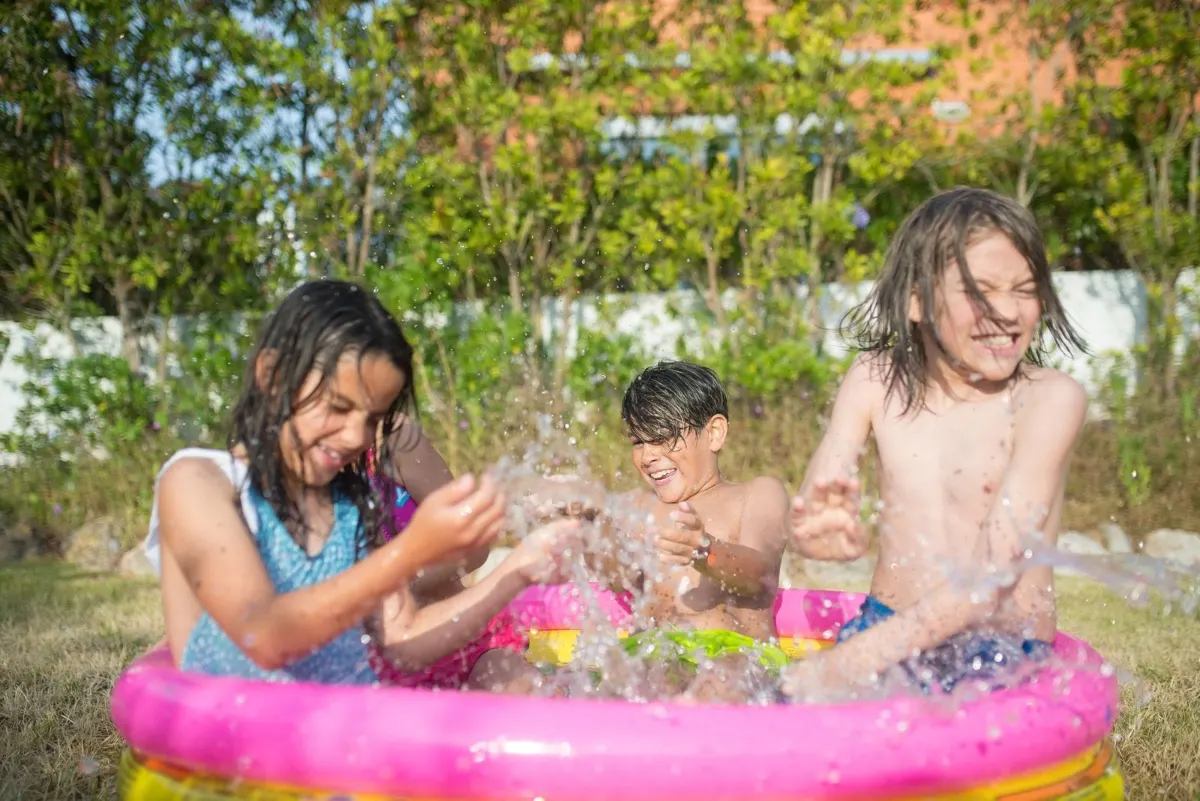
Set a shallow plastic storage bin on a low table or a stack of bricks, fill it two inches deep, and hand over a few kitchen items: measuring cups, a funnel, a colander. Toddlers will pour water back and forth for far longer than a store-bought water table usually earns, mostly because there’s nothing “programmed” about it for them to get bored of.
Why It Works
- Open-ended pouring builds fine motor control without any instruction needed
- Costs nothing if you already own the bin and cups
Watch For
- Never leave a toddler alone near standing water, even 2 inches deep
- Clothes will get soaked, so plan for a change after
2. Backyard Car Wash
Hand a toddler a bucket of soapy water and a soft sponge and point them at a ride-on toy, a bike, or the porch railing. Toddlers who love “helping” tend to gravitate toward this one especially, and it gives them a clear finish line (the thing gets clean) that most open-ended play doesn’t.
Why It Works
- Gives a toddler a real “job” with a visible result
- Practices the same wrist motion as painting, without the mess indoors
Watch For
- Use plain water or a tiny amount of baby-safe soap, not regular car soap
- Wet pavement gets slippery, so keep shoes on
3. Puddle Stomping After Rain
This is the closest thing to a free pass on this whole list. Rain boots, a puddle, fifteen minutes. Done. Jumping repeatedly is real gross-motor work even if it doesn’t feel like “exercise” to a two-year-old, which is why this one tires kids out faster than almost anything else here.
Why It Works
- Jumping builds balance and leg strength
- Zero cost, zero setup, weather-dependent so it stays a treat
Watch For
- Check puddle depth first, since some hide uneven curbs or drains underneath
- Avoid puddles near roads or parking lots
Nature Exploration
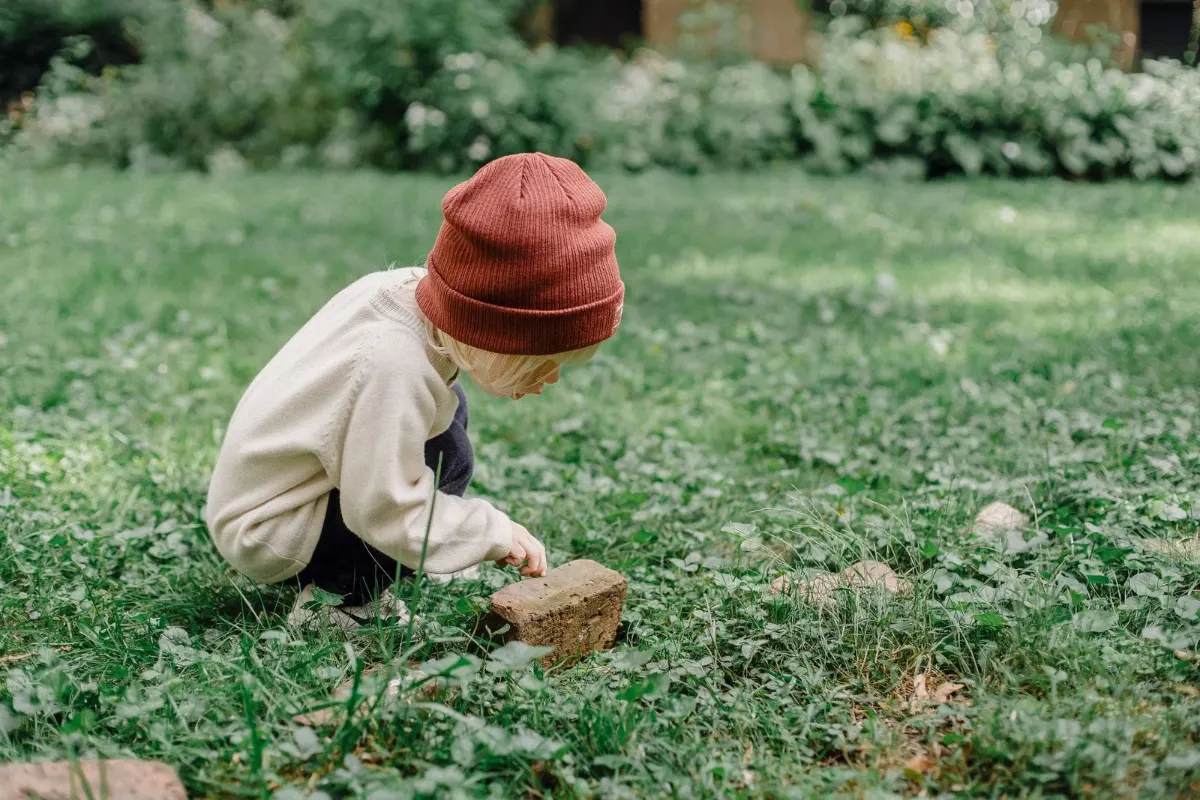
These lean into a toddler’s natural instinct to pick things up and examine them, which is most of what outdoor play in early childhood actually looks like once you strip away the Pinterest styling.
4. Nature Scavenger Hunt
Draw or print four to six simple pictures (a leaf, a rock, something yellow, something round) and let a toddler match real objects to the pictures as they find them. Two-year-olds do best with pictures instead of a written list; three- and four-year-olds can usually handle a short word list too.
Why It Works
- Builds early categorization and matching skills
- Works in a yard, a park, or on a walk, no fixed location needed
Watch For
- Skip mushrooms and unknown berries on the hunt list entirely
- Remind toddlers to look, not taste
5. Bug Hotel Building
Stack sticks, pinecones, dry leaves, and hollow stems loosely inside an old box or crate to make a spot bugs might actually move into. This one runs slower than most toddler outdoor games, and it’s one of the few activities on this list a toddler can genuinely revisit over several days to check on.
Why It Works
- Teaches gentle handling and patience, with nothing to “finish” right away
- Free materials, no purchase needed
Watch For
- Wash hands after handling sticks and leaves
- Keep an eye out for wasps if the hotel sits for more than a few days
6. Leaf and Stick Sorting
Give a toddler an empty muffin tin or an egg carton and send them off to fill each slot with a different kind of leaf, stick, or rock. Quiet and repeatable, it holds up well as a solo activity while a parent is nearby doing something else outside.
Why It Works
- Supports independent play, since a toddler can do this without hands-on help
- Builds early sorting and pincer-grasp practice
Watch For
- Check the yard for sharp debris before handing over the tin
- Still stay within sight, since small sticks are a poke risk at this age
Movement and Gross Motor Play
This is where the real energy-burning happens. If the goal is a toddler who naps well and sleeps through the night, this section is doing most of the work. Once a toddler has these basics down, a lot of families end up looking at real equipment next — our guide to the best trampoline for toddlers age 2-5 covers what to check before buying one.
7. Household Obstacle Course
Line up whatever is around: a pool noodle to step over, a laundry basket to crawl through, a chalk line to balance-walk along, a cushion to jump onto. Rebuild it every few days so it stays new; the course itself matters less than the variety of movements it forces (step, crawl, balance, jump).
Why It Works
- Hits four gross-motor skills in one activity: balance, crawling, jumping, stepping
- Free to build with items already in the garage
Watch For
- Keep the jump height under 12 inches for toddlers under 3
- Lay it out on grass, not concrete
8. Sidewalk Chalk Hopscotch
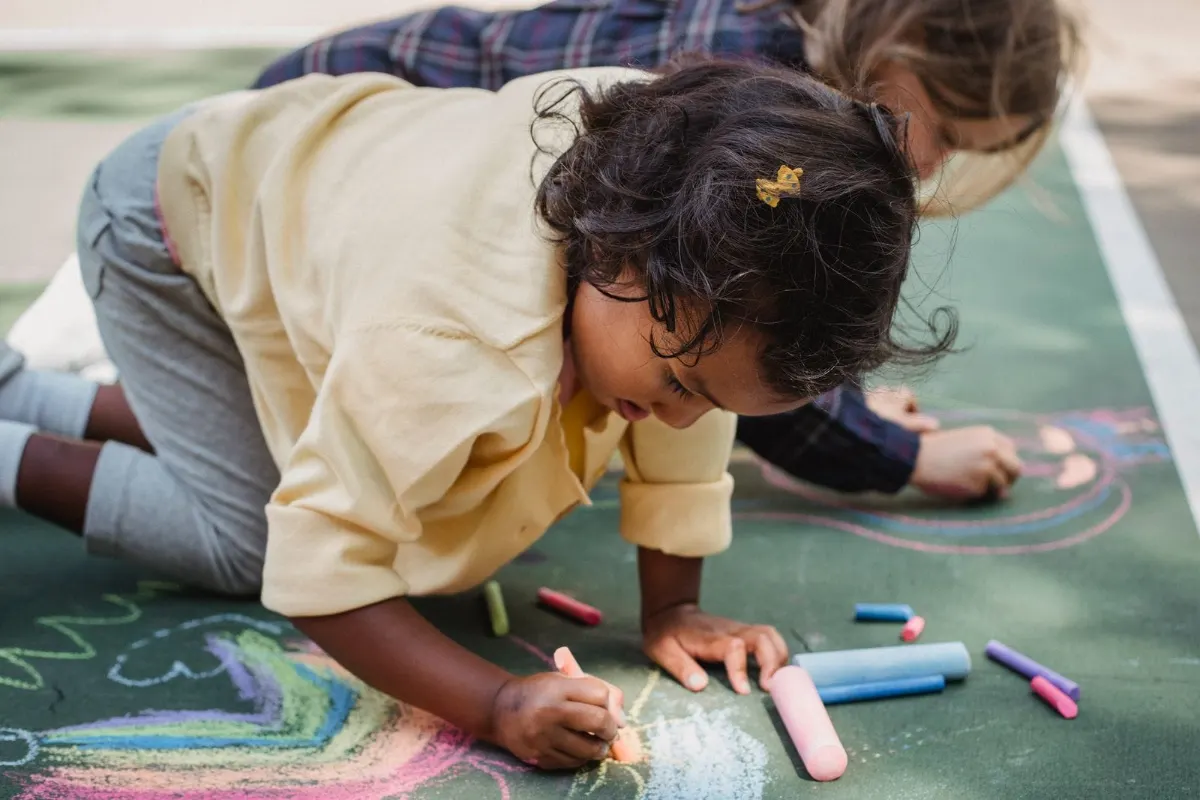
Draw a simplified hopscotch grid with big, close-together squares. A real hopscotch layout is usually too advanced for toddlers under 3, so shrink it down and let them jump square to square however they want at first. Add numbers or colors in each square once they’ve got the jumping part down.
Why It Works
- Builds balance and number or color recognition together
- Chalk washes away, so it’s never a permanent mess
Watch For
- Draw on a flat, even surface away from steps
- Skip the one-foot hop rule, since most toddlers can’t balance on one foot yet
9. Bubble Chase
An adult blows bubbles, the toddler chases and pops them. It sounds almost too simple to list, but it’s consistently one of the highest-energy, lowest-effort outdoor activities for toddlers on this entire list, and it works from about 12 months all the way through preschool age.
Why It Works
- Chasing and popping builds hand-eye coordination and running control
- A single bottle of bubbles lasts weeks
Watch For
- Bubble solution can sting eyes, so rinse if it happens
- Keep it away from the mouth; most solutions aren’t meant to be swallowed
10. Balance Beam Walk
Lay a garden hose in a wavy line on the grass, or use a low 2×4 board, and let a toddler practice walking heel-to-toe along it with arms out. This is a genuinely useful pre-skill for climbing playground equipment later, not just a way to pass ten minutes, and it’s also roughly the same balance skill a toddler needs before starting on a balance bike — see what age a balance bike is right for if that’s the next thing on the list.
Why It Works
- Direct balance and core-strength practice
- A hose costs nothing extra if you already have one
Watch For
- Keep board height under 2 inches off the ground for toddlers
- Stand close enough to catch a wobble
Simple Group Games
These need at least one other kid or adult playing along, which makes them a good pick for playdates, siblings, or a backyard with cousins over.
11. Toddler Duck, Duck, Goose
The real version has too many rules for most toddlers, so simplify it: everyone sits in a loose circle, an adult taps heads and says “duck,” then picks a “goose” and just does a slow, exaggerated chase instead of a real race. The rule-bending is the point: it keeps the fun without the frustration of a toddler who can’t run fast enough to “win.”
Why It Works
- Introduces turn-taking in a low-stakes way
- Works with as few as 3 kids
Watch For
- Skip it with toddlers who get overwhelmed by being “chased”
- Play on grass, not pavement, in case of a trip
12. Backyard Freeze Dance
Play music from a phone, everyone dances, pause the music and everyone freezes. There’s zero prep involved, and toddlers who can’t yet follow multi-step game rules can usually manage “dance, then stop” without any trouble.
Why It Works
- Builds impulse control, since stopping on cue is genuinely hard at this age
- No equipment beyond a phone speaker
Watch For
- Clear the dance space of toys or hoses first, since they’re trip hazards during freezing
- Keep volume reasonable for little ears
13. Sticker Hunt
Hide 10-15 large stickers around the yard or porch (on a chair leg, a fence post, a plant pot) and send toddlers off to find and collect them. It plays almost like an Easter egg hunt but works any day of the year, and it’s a strong option for toddlers under 2 since there’s no chasing or complex rules involved.
Why It Works
- Low physical demand, good for younger toddlers or hot days
- Easy to make harder or easier by hiding spots higher or lower
Watch For
- Use large stickers, not small ones, to avoid a choking risk
- Count how many you hide so none get left behind outside
14. Watering Can Garden Helper
Fill a small, toddler-sized watering can and let them water plants, pots, or even just the grass. It’s repetitive in a way toddlers genuinely enjoy, gives them a real task instead of a pretend one, and stays calm enough for kids who get overstimulated by louder games.
Why It Works
- A genuine responsibility, not just pretend play
- Calm-paced, good for winding down before nap
Watch For
- Use a small can, since a full-size one is too heavy to lift safely
- Skip watering near electrical outlets or equipment
Outdoor Activities for Toddlers at a Glance: Age and Energy Level
| Activity | Best Age | Energy Level | Setup Time |
|---|---|---|---|
| DIY Splash Table | 18mo+ | Low | 2 min |
| Backyard Car Wash | 2yr+ | Medium | 2 min |
| Puddle Stomping | 1yr+ | High | 0 min |
| Nature Scavenger Hunt | 2yr+ | Medium | 5 min |
| Bug Hotel Building | 2.5yr+ | Low | 10 min |
| Leaf and Stick Sorting | 18mo+ | Low | 1 min |
| Household Obstacle Course | 2yr+ | High | 5 min |
| Chalk Hopscotch | 2.5yr+ | Medium | 3 min |
| Bubble Chase | 1yr+ | High | 0 min |
| Balance Beam Walk | 2yr+ | Medium | 3 min |
| Toddler Duck Duck Goose | 2.5yr+ | High | 0 min |
| Backyard Freeze Dance | 1.5yr+ | High | 0 min |
| Sticker Hunt | 1yr+ | Low | 5 min |
| Watering Can Helper | 1.5yr+ | Low | 1 min |
Frequently Asked Questions
How much outdoor time does a toddler actually need?
Most pediatric guidance points to at least an hour of active play a day for toddlers, spread across the day rather than in one block. Outdoor activities for toddlers don’t need to be long single sessions. Three 20-minute stretches add up the same way one hour-long session does, and it’s usually easier to hold a toddler’s attention in shorter bursts anyway.
What are good outdoor activities for toddlers who get overstimulated easily?
Lean toward the quieter end of this list: watering can helper, sticker hunts, and leaf sorting all have a slower pace and no loud or chasing element. Skip freeze dance and duck-duck-goose for a toddler who tends to melt down around noise or fast movement, and keep the group small if other kids are around.
Do these outdoor activities for toddlers work in a small yard or apartment patio?
Yes. More than half the list (splash table, leaf sorting, sticker hunt, watering can, bubble chase) needs only a few square feet, not a full yard. A porch, a small patio, or even a wide sidewalk covers most of what’s here.
What’s the easiest outdoor activity for a toddler under 18 months?
Puddle stomping and bubble chase are usually the earliest ones toddlers can do independently, since both are just gross-motor movement with no rules to follow. Sticker hunts and watering can helper work well slightly after, once a toddler can follow a one-step instruction reliably.
How do I keep a toddler safe while playing outside without hovering constantly?
Set up the play space first, clearing obvious hazards like standing water, sharp debris, or an unlatched gate, and then stay within arm’s reach rather than standing over every activity. Most of the outdoor activities for toddlers on this list are designed to run with normal supervision from a few feet away, not constant hands-on involvement.
What’s the difference between outdoor activities and outdoor toys for toddlers?
Outdoor toys are things you buy, like a trampoline, a play kitchen, or a ride-on car. Outdoor activities for toddlers are games and backyard activities that need little to no equipment, which is the entire focus of this guide. If a toddler is ready for real gear, our outdoor toys guide covers that separately; these outside activities for toddlers are meant to fill the gap between an empty backyard and another purchase.
Practical Takeaway
That’s the pattern behind every one of these easy outdoor activities for toddlers: less setup, more repetition, and letting a toddler control the pace instead of running a scripted game. None of it needs to be planned days in advance. Most families find that rotating through five or six of these on a regular basis works better than trying all fourteen at once, since a toddler who’s had a chance to get genuinely good at one game tends to enjoy it more the second and third time around, not less.
About the Author: Emma Carter
Emma Carter writes and edits every guide on 3 Things for Mom. She researches each recommendation through manufacturer specs, safety certifications, and patterns across real customer reviews before it makes the list. More on how picks are made →
(Illustrated avatar, not a photograph.)